How to Keep a Greenhouse from Freezing in a UK Winter
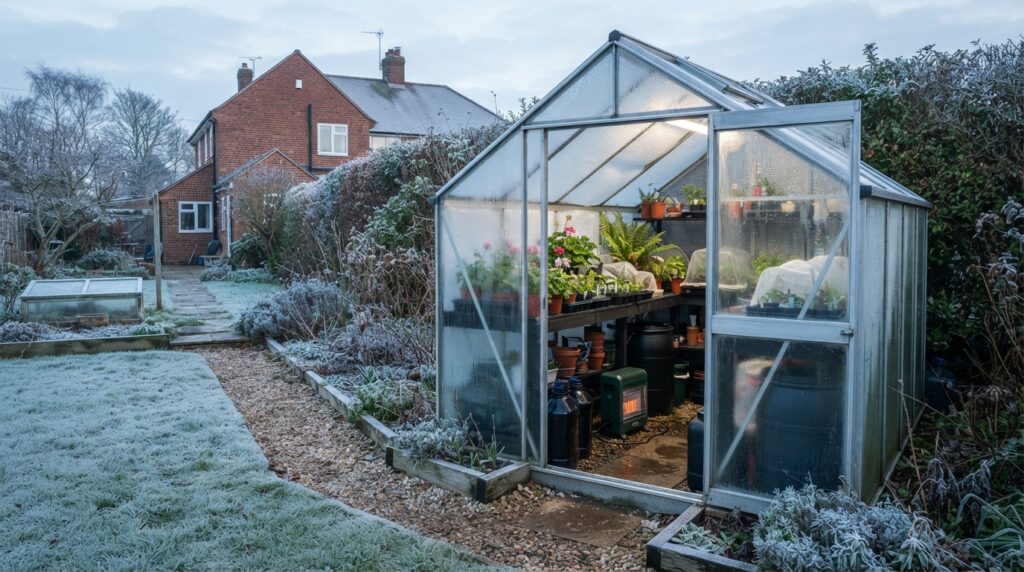
You don’t need a tropical hothouse; for most UK gardeners the target is frost-free (4°C), which the RHS says is enough to keep tender plants through the winter. The two things that make the biggest difference: insulating with bubble wrap, which the RHS notes cuts light by about 10% but keeps heating bills down, and using an electric heater with a thermostat that only fires up when the temperature drops. Paraffin heaters can work but the RHS is clear they’re only really suitable for plants that can withstand quite low temperatures, and they need ventilation because they produce combustion byproducts — carbon monoxide included. Ventilate on mild sunny days to keep damp down, and put a min/max thermometer in there so you know what it’s actually doing overnight.
An unheated glass greenhouse in a British winter can drop below the outside temperature on a still, clear night, because the glass radiates heat straight to a cold sky. That’s the thing to fix. Here’s what the RHS actually recommends, in the order that gives the best value.
Decide the target temperature first
The RHS mentions maintaining a frost-free (4°C) greenhouse as enough to grow tender plants through winter. Heating to a genuine “warm” level (10°C or above) costs several times more, because every extra degree costs more energy the further above outside you go. For overwintering geraniums, fuchsias, tender salads and half-hardy perennials, frost-free is what you’re aiming for — and it means a heater that spends most of the winter switched off.
Step 1: bubble wrap insulation
Horticultural bubble wrap insulation
The biggest saving for the least money
Fits inside the frame
Reusable for several winters
Look for horticultural bubble wrap specifically, since it has bigger bubbles than the packing version and doesn’t yellow as quickly in UV. Buy enough to do the roof and end walls at least. Fixing clips designed for aluminium frames are the tidy solution; drawing pins work on wood. Store it dry at the end of winter and it will do several seasons. Measure the frame before buying, because widths vary.
Good for: aluminium and wooden greenhouses; the biggest cut in heat loss you’ll get for the money; extending the useful growing season into November and out again in February.
Less good for: polytunnels, which are already single-layer plastic and benefit less. It also reduces light by about 10%, so plants that need every scrap of winter light don’t love it.
Step 2: pick a heater that matches the job
The RHS runs through the options:
- Electric heaters are easily controlled and widely available with thermostats. For frost protection they’re the most practical choice for most gardeners with a mains outlet nearby.
- Fan heaters provide more heat and improve air circulation, which helps prevent damp air sitting around leaves.
- Tube heaters use lower energy than fan heaters and give background heat — useful for a small greenhouse where you just want to lift the temperature off freezing.
- Gas and paraffin heaters the RHS describes as only really useful for plants that can withstand quite low temperatures, and they need ventilation because they produce combustion byproducts.
Step 3: the thermostat matters more than the heater
A greenhouse heater without a good thermostat runs when it doesn’t need to, which is where the bills come from. A tube heater plugged in continuously and left on will happily use electricity all winter warming a greenhouse that never needed heat. Look for a heater with a built-in thermostat, or add an external plug-in thermostat you can dial to 4°C or 5°C. The RHS notes that thermostat dials may be inaccurate by a few degrees, which is another argument for having a proper thermometer in there to check.
A greenhouse min/max thermometer
Know what really happens at 3am
Digital or analogue
Battery powered
A min/max thermometer tells you what happened while you weren’t there, which is the whole point in a greenhouse. It’s the only reliable way to check whether your heater is doing its job, or whether the greenhouse is running colder than the thermostat claims. Position it at plant height rather than on the glass, out of direct sun. Digital models are easier to read, but a good analogue one lasts decades.
Good for: checking a new heating setup is working; catching a night the heater failed; sizing a heater for how cold your greenhouse really gets.
Less good for: doing anything about a problem it finds — it measures, it doesn’t fix. Cheap models can drift by a degree, so don’t obsess over the last half-degree.
Step 4: don’t forget to ventilate
The RHS is clear that on mild and sunny days you should ventilate the greenhouse freely by opening doors and windows to reduce dampness and humidity. That’s counter-intuitive when you’re trying to keep it warm, but a damp, still greenhouse is where fungal disease takes hold, and it’s harder for tender plants to recover from botrytis than from a chilly night.
Step 5: the safety points that matter
- Any electric heater needs a proper outdoor-rated supply. The RHS’s advice is to make sure the electrical connection to the greenhouse is installed professionally to ensure safety.
- Don’t run an extension lead from the house through a partly-open window all winter, particularly one that isn’t rated for outdoor use.
- Never use a fuel-burning heater in a fully sealed greenhouse, and never leave one unattended overnight without ventilation and confidence in the flame.
- Check heaters and cables at the start of the season before you rely on them.
Frequently asked questions
What temperature should a greenhouse be in winter?
For overwintering most tender plants, the RHS mentions a frost-free target of 4°C as enough. Heating warmer than that costs disproportionately more.
Does bubble wrap actually make a difference in a greenhouse?
Yes. The RHS notes that a layer of bubble wrap cuts out about 10% of light but is usually considered a worthwhile trade-off to keep heating bills down.
Are paraffin heaters safe in a greenhouse?
The RHS says they’re only really useful for plants that can withstand quite low temperatures, and they need ventilation because they produce combustion byproducts. Never use one in a fully sealed greenhouse.
What’s the cheapest way to heat a greenhouse?
Insulating with horticultural bubble wrap first, then using an electric heater with a thermostat set no higher than needed — often 4–5°C for frost protection. A tube heater gives low background warmth; a fan heater is more responsive to sudden cold snaps.
Sources
- Royal Horticultural Society — Greenhouses: heating efficiently
- NHS — Carbon monoxide poisoning
Related reading: our protecting garden plants in a heatwave, storm-proofing your home and planning a garden room.
Compare current horticultural bubble wrap insulation at Amazon UK.