How to Keep a Fish Tank Cool in a UK Heatwave
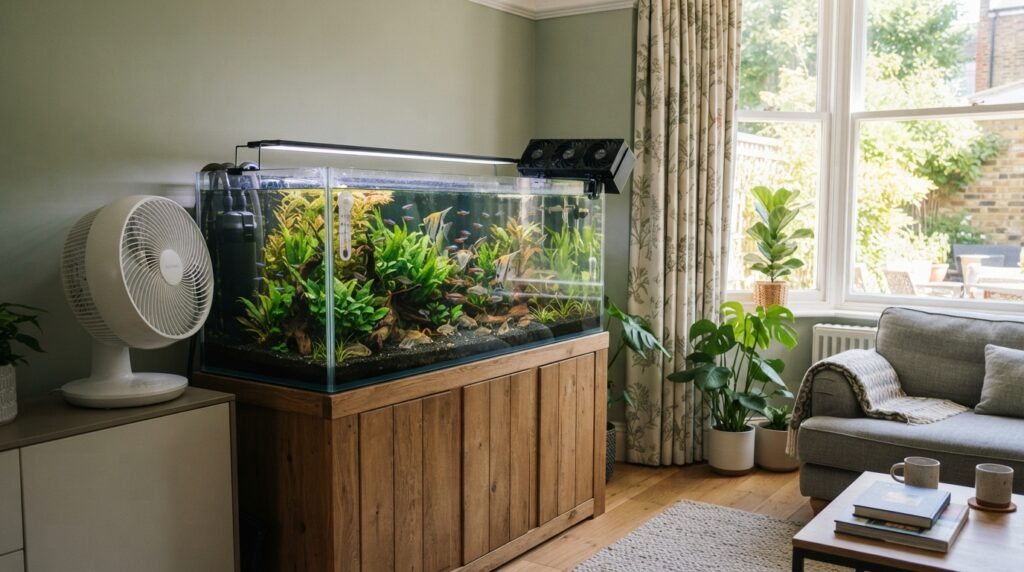
A fish tank follows the temperature of the room it’s in, so the most effective and gentlest fix is usually to keep the room itself cooler. Close the curtains, keep the tank out of direct sun, and cool the room if you can. On the tank itself, turn the lights off and point a fan across the water’s surface, which cools by evaporation. Add an airstone or increase surface movement, because warm water holds less oxygen. Just as important is what not to do. Practical Fishkeeping warns against dropping ice straight into the tank, making large cold water changes, or cooling the water quickly, because a sudden temperature swing can do more harm than the heat itself.
Heatwave advice rarely mentions fish, yet an aquarium in a sunny living room can warm up well beyond what its occupants are comfortable with. Here’s how to bring the temperature down safely, using methods recommended by UK fishkeeping experts.
Why hot weather is a double problem for fish
High water temperature causes trouble in two ways at once. Fish are cold-blooded, so their metabolism speeds up as the water warms, and they need more oxygen. At the same time, warm water physically holds less dissolved oxygen than cool water. More demand and less supply is why fish can struggle in a heatwave even when the temperature isn’t dramatically high. Practical Fishkeeping lists the warning signs as gasping, rapid gill movement, lethargy, hanging near the filter, loss of appetite and erratic swimming. If you see these, act straight away.
Start with the room, not the tank
Turn the lights off
Aquarium lighting adds heat, so switching it off during a heatwave is an easy first step. Practical Fishkeeping notes one catch for planted tanks: plants stop producing oxygen when the lights are off, so increase aeration to compensate.
Use a fan across the surface
A small fan blowing across the water’s surface is one of the most effective hands-on methods, because it cools the water by evaporation. Practical Fishkeeping’s caveat is that this also increases evaporation significantly, so the water level will fall faster than usual. Top up with dechlorinated water regularly, and don’t let the level drop so far that your filter stops working properly. Forgetting evaporation top-ups is on Practical Fishkeeping’s list of things never to do.
A clip-on aquarium cooling fan
Evaporative surface cooling for the tank
Blows across the water surface
Low running cost
A purpose-made aquarium fan clips to the rim and directs air across the surface, which is exactly how Practical Fishkeeping describes the method working. It’s a cheap, low-power option that’s far easier to live with than a chiller. Check that it fits your tank’s rim and lid arrangement before buying, since a fully sealed lid stops surface airflow.
Good for: gentle, steady cooling; small and medium tanks; far lower cost than a chiller.
Less good for: very large tanks or a very hot room, where it may not keep up on its own. It also speeds up evaporation, so you’ll be topping up more often.
Increase oxygen and surface movement
Because warm water holds less oxygen, Practical Fishkeeping recommends adding an airstone or otherwise increasing surface agitation. More movement at the surface improves gas exchange and helps a little with cooling too. Reducing surface movement is on its list of things never to do in hot weather.
Water changes and frozen bottles: go gently
A modest water change with slightly cooler water can help. Practical Fishkeeping suggests around 25%, but warns against dropping the temperature too quickly or too far. For emergencies, a sealed frozen water bottle floated in the tank can bring the temperature down gradually, as long as you monitor it closely. What you should never do is tip ice straight into the water or carry out a large cold water change, since sudden temperature swings stress fish badly. Practical Fishkeeping also advises against switching the heater off, because it’s there to prevent the tank getting too cold once the room cools overnight.
Other options
- Aquarium chillers are the most effective option, according to Practical Fishkeeping, but they’re expensive and are usually only worth it for tanks that regularly overheat. It warns that DIY alternatives are unreliable.
- Polystyrene on the sides of the tank can reduce the heat it picks up from the room, as long as the surface stays open for gas exchange.
- A thermometer you actually check matters more in a heatwave than at any other time. Look at it morning and evening so you notice changes early.
Frequently asked questions
Can I put ice cubes in my fish tank to cool it down?
No. Practical Fishkeeping warns against putting ice directly into the tank, because it can drop the temperature too quickly. A sealed frozen bottle, used carefully and monitored, is the safer emergency option.
Should I turn my aquarium heater off in a heatwave?
Practical Fishkeeping advises against it. The heater is there to stop the temperature falling too far, which can still happen overnight once the room cools down.
Does air conditioning help keep a fish tank cool?
Yes. A tank follows the temperature of the room, so cooling the room is one of the gentlest ways to bring the water down. Keep the unit’s airflow pointed away from the tank itself.
Sources
- Practical Fishkeeping — How to cool your aquarium in a heatwave
- Maidenhead Aquatics (Fishkeeper) — Beat the heat: keep your aquarium cool this summer
Related reading: our room thermometer guide and keeping heat out of your home.
Compare current clip-on aquarium cooling fans at Amazon UK.