How to Store Emergency Drinking Water at Home (UK): How Much, How Long and What Containers
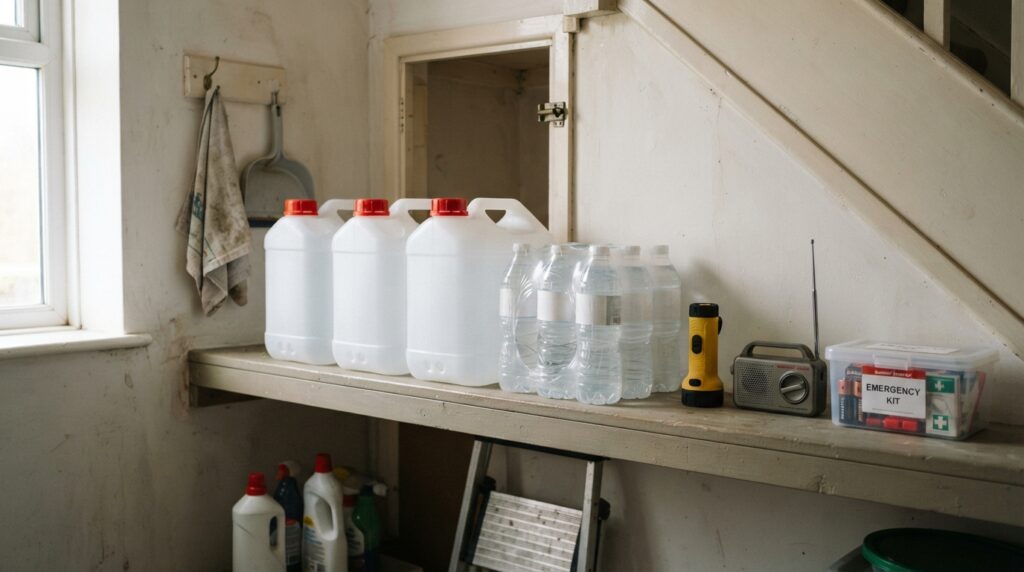
The UK government’s Be Ready advice is to keep bottled water for 3 days: 3 litres per person per day for drinking, plus more for cooking, washing, pets, baby formula and medical devices. It says “bottled water is the safest way to prepare for water outages”. If you fill containers from the tap instead, UK water companies say to keep tap water in a covered container in the fridge and replace it every day. For a planned outage, fill clean containers just beforehand. Keep stored water somewhere cool and dark, and never in a container that once held fuel, paint or other chemicals.
Taps running dry isn’t just a storm problem. Between November 2025 and January 2026, up to 70,000 homes supplied by South East Water in Kent and Sussex were left without water during a series of supply failures, ITV News reported, and the company has since agreed a £30.5 million redress package with Ofwat. Burst mains, freezing weather and power cuts can all cut supplies. Here’s how much water to keep, how to store it, and what your water company has to do when supplies fail.
How much water to store
The government’s Be Ready campaign says to have “bottled water for 3 days”, with “3 litres per person per day for drinking”, and adds: “More would be needed for other tasks such as cooking and washing.”
| Household | Drinking water, 1 day | Drinking water, 3 days |
|---|---|---|
| 1 person | 3 litres | 9 litres |
| 2 people | 6 litres | 18 litres |
| 3 people | 9 litres | 27 litres |
| 4 people | 12 litres | 36 litres |
| 5 people | 15 litres | 45 litres |
Then add extra for:
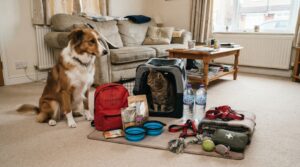
- Pets. The government’s kit list includes “pet food and bottled water”.
- Babies. Be Ready suggests keeping ready-made or “ready-to-feed” formula, because you “may not be able to boil water”.
- Medical devices that need water.
- Flushing the toilet and washing. This doesn’t need to be drinking water.
Bottled water vs filling your own containers
Bottled water
This is the easiest option and the one the government recommends. Buy multipacks of sealed bottles and keep them in their wrapping. Bottled water has a best before date, and GOV.UK explains that best before dates “relate to quality” rather than safety. Even so, it’s easiest to rotate it: use the oldest packs in everyday life and replace them, so your stock is always in date.
Tap water in your own containers
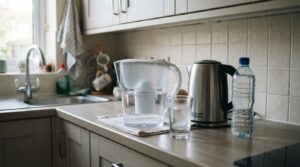
UK water companies’ advice for storing tap water is short-term. Northern Ireland Water says water kept in the fridge “needs to be changed every day, or used within 24 hours”, and South West Water says to keep it “in the fridge in a covered container” and replace it every day. We couldn’t find a UK water company or regulator recommending long-term storage of tap water at home.
So use your own containers when you know an outage is coming, such as planned works, a freezing forecast or a storm warning. Fill them with fresh tap water just before, keep them covered, and use them within a day or so. For anything longer, rely on sealed bottled water.
Where and how to store it
- Cool and dark. The UK Chief Medical Officers’ power-outage advice says to “store your water in a cool, dark place”.
- Clean, food-grade containers only. The same advice says not to use “a container that used to hold chemicals such as fuel or paint”.
- Away from chemicals like garage solvents, and not in direct sun.
- Spread it out. Large bottles are heavy, so a few smaller packs are easier to move than one huge drum.
Never drink water from a water butt
The government’s advice on water outages is clear: don’t drink water from a water butt, as it “could contain bacteria or disease”. Use it for flushing toilets or watering plants instead. For other alternative water sources in an emergency, it says boiling or purification tablets “can help make it safer to drink”, but most will need filtering first, and you should follow the instructions on the tablet label.
What your water company does when the taps run dry
- Bottled water stations. Thames Water, for example, says it sets up bottled water stations if supply isn’t restored within 12 hours, and each customer receives two packs of six 2-litre bottles.
- Deliveries for vulnerable customers. Be Ready says that if you’re on the Priority Services Register, “your water company will arrange alternative supplies for you”. Contact your water company to join; it’s free.
- Boil water notices. If there’s a risk to water quality, the Drinking Water Inspectorate says you may be told to boil water before using it. Bring it to a rolling boil, let it cool naturally, and store any boiled water in a clean container in the fridge, throwing it away if it’s not used within 24 hours.
Compensation for supply interruptions
Under the Guaranteed Standards Scheme, consumer body CCW says that in England:
- For planned work, your water company must give at least 48 hours’ notice, or pay £50.
- If your supply isn’t restored by the time the company said (or within 12 hours of an emergency burst main), it must pay £50, plus £50 for each further full 12 hours, up to a cap.
In Wales, the amounts are lower: £20 if you don’t get 24 hours’ notice of planned work, and £20 plus £10 for each further 24 hours if supply isn’t restored on time.
The kit worth buying
Reliance Aqua-Tainer water container (about 15 litres)
Best for: filling up before a planned outage
BPA-free plastic
Built-in spigot and vent cap
A rigid container with a tap is the easiest way to store and use a day or two’s water. According to a US retailer’s listing, the 4-gallon (about 15-litre) Aqua-Tainer is food-safe and BPA-free, with a hideaway spigot that reverses for storage and a screw-on vent cap. That’s enough drinking water for one person for 5 days, or a family of four for just over a day.
Good for: planned water works; a freezing forecast; camping the rest of the year.
Less good for: long-term storage of tap water. Refill with fresh water, and clean it between uses. Full, it weighs over 15kg.
Colapz collapsible 2-in-1 water carrier and bucket (8 litres)
Best for: collecting water from a bottled water station
Folds to 9cm deep
Tap and screw lid
Colapz says this carrier is made from BPA-free, food-grade recyclable plastic, collapses to 9 x 22 x 22cm and expands to 25 x 22 x 22cm, and has a tap and a lid with a 6cm-wide opening. It folds flat in a cupboard until you need it, then works as a jug or bucket. A 20-litre version is also available.
Good for: small homes and flats with little storage; caravans and campervans.
Less good for: storing large amounts. It’s a carrier, not a long-term store.
LifeStraw Personal water filter
Best for: a lightweight backup in a grab bag
Up to 4,000 litres
No batteries or chemicals
LifeStraw says this straw filter removes “99.999999% of bacteria” and “99.999% of parasites”, has a 0.2 micron pore size and lasts up to 4,000 litres. Its own FAQ says it’s designed for biological contaminants, so don’t rely on it for chemicals or contaminated floodwater. Treat it as a backup to stored bottled water, not a replacement, and follow any boil water notice from your water company.
Good for: grab bags; walking and camping kits.
Less good for: a whole household’s water; floodwater; water that may contain chemicals.
Frequently asked questions
How much emergency water should I store per person in the UK?
The government’s Be Ready advice is 3 litres per person per day for drinking, for 3 days, so 9 litres per person, plus more for cooking, washing, pets, babies and medical devices.
How long can I store tap water?
UK water companies say to keep tap water covered in the fridge and replace it every day. For emergency stocks, the government says bottled water is the safest way to prepare.
Does bottled water go off?
Bottled water has a best before date, which relates to quality rather than safety. It’s easiest to rotate your stock by using the oldest packs first.
Will my water company give me bottled water if my supply is cut?
Usually, yes, for longer outages. Thames Water and Southern Water, for example, set up bottled water stations and deliver to customers on their Priority Services Register.
Can I get compensation if my water is cut off?
In England, CCW says the Guaranteed Standards Scheme pays £50 if supply isn’t restored by the stated time (or within 12 hours of an emergency burst), plus £50 for each further 12 hours, up to a cap. Payments are lower in Wales.
Sources
- GOV.UK — Be ready for emergencies and Water supply interruptions or outages
- GOV.UK — UK CMOs: water and sanitation advice during a power outage
- GOV.UK — Best before and use by dates
- Drinking Water Inspectorate — Receiving a boil water notice
- Northern Ireland Water — Keep a jug of water in the fridge
- South West Water — Maintaining the quality of water in your property (PDF)
- Thames Water — What happens during an incident
- Southern Water — What happens when there’s an incident
- CCW — What standards are guaranteed by water and sewerage companies?
- ITV News — South East Water to pay £30.5 million after repeated supply failures
- Jay’s Sporting Goods — Reliance Aqua-Tainer 4 gallon
- Colapz — Collapsible 2-in-1 water carrier and bucket, 8L
- LifeStraw — LifeStraw Personal
Related reading: our storm-proofing guide, how to thaw a frozen condensate pipe and will winter 2026/27 be the coldest for years?
Compare food-grade water containers at Amazon UK.