UK Storm Names 2026/27: The Full List and How Storms Get Named
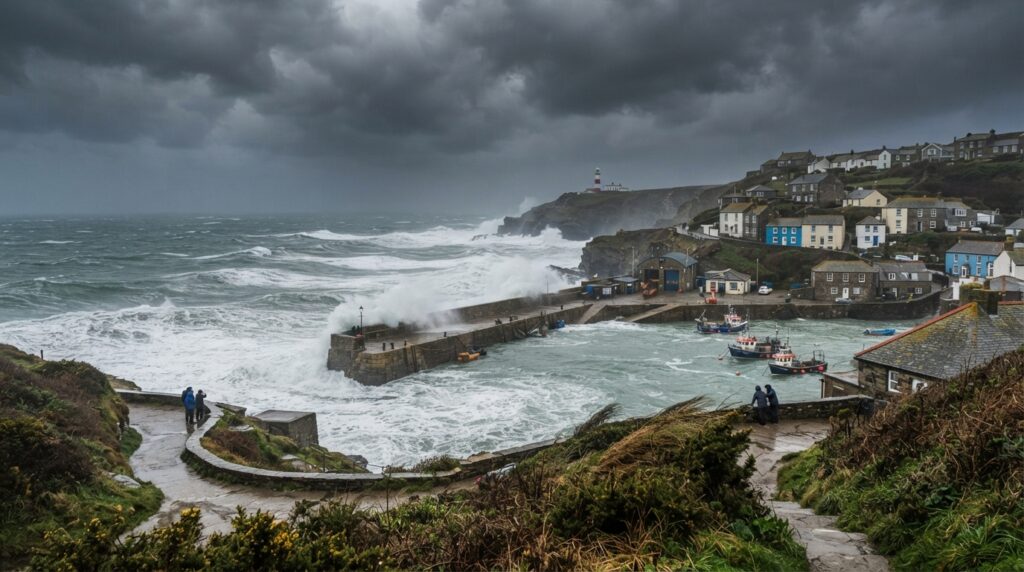
The 2026/27 storm names were announced by the Met Office on 1 September 2026, chosen jointly with Ireland’s Met Éireann and the Netherlands’ KNMI. The 21 names are: Austen, Boelo, Chloe, Dano, Evelyn, Finn, Gwendolyn, Heather, Ivy, Jade, Kilian, Laoise, Miriam, Nicola, Olaf, Phelim, Ruban, Shaun, Theo, Vesna and Wende. Two have already been used: Storm Austen was named on 20 October and brought an amber wind warning to Cornwall, the Isles of Scilly and parts of Devon, and Storm Boelo, named on 22 October, has brought an amber wind warning for much of Scotland, parts of northern England and Northern Ireland this weekend. A storm is named when it’s expected to cause disruption or damage serious enough for an amber or red warning.
Every September, the UK’s storm names for the coming season are published, and every autumn, the first named storm makes headlines. Here’s the full 2026/27 list, who chose each name, what it takes for a storm to get a name, and what to do when one’s heading your way.
The full 2026/27 storm names list
The season runs from 1 September 2026 to 31 August 2027. Names are used in alphabetical order:
| Name | Say it | Chosen by |
|---|---|---|
| Austen | — | Met Éireann |
| Boelo | Boo-loh | KNMI |
| Chloe | — | Met Office |
| Dano | Dah-noh | KNMI |
| Evelyn | — | Met Éireann |
| Finn | — | Met Office |
| Gwendolyn | Gwen-duh-lin | KNMI |
| Heather | — | Met Éireann |
| Ivy | — | Met Office |
| Jade | — | KNMI |
| Kilian | — | Met Éireann |
| Laoise | Lee-sha | Met Éireann |
| Miriam | — | Met Éireann |
| Nicola | — | Met Office |
| Olaf | — | KNMI |
| Phelim | Fay-lim | Met Éireann |
| Ruban | — | Met Office |
| Shaun | — | Met Office |
| Theo | — | Met Office |
| Vesna | Vehs-nuh | KNMI |
| Wende | Vhen-duh | KNMI |
One small oddity: the Met Office’s written list spells the K name “Kilian”, while its image of the list, and the Royal Meteorological Society, spell it “Killian”.
Why there’s no Q, U, X, Y or Z
The Met Office says the list “excludes certain letters to align with international storm-naming conventions”. The Royal Meteorological Society explains that the letters left out are Q, U, X, Y and Z, because there are fewer available names starting with them.
Where the names came from
The Met Office says many of this year’s names came from public suggestions:
- Chloe was nominated more than 130 times.
- Shaun was chosen by public vote, in a poll run with Aardman, the studio behind Shaun the Sheep.
- Finn, Ivy, Nicola and Theo were suggested in honour of a two-year-old boy, a Labrador puppy, a mum and a cat.
- Austen honours Austen Nagle, the first director of the Irish Meteorological Service, for Met Éireann’s 90th anniversary, and Evelyn honours Evelyn Murphy, the first woman to present the weather on RTÉ.
- KNMI picked its names from more than 3,000 public suggestions.
How does a storm get a name?
The Met Office says “a storm is named when it is expected to cause disruption or damage significant enough to warrant an amber or red warning.” Strong wind is usually the main factor, but heavy rain and snow are taken into account too. The scheme has been run by the Met Office, Met Éireann and KNMI since 2015.
A name doesn’t always come with an amber warning on day one. The Met Office notes that “a storm may therefore be named while only yellow warnings are in force”, because forecasters expect it to escalate. That’s exactly what happened with Storm Austen.
Why bother naming them? Holly Clements, the Met Office’s Head of Warnings and Guidance, says “a named storm provides a clear focus for forecasts and warnings, helping more people understand the potential impacts.” The Met Office says that after Storm Goretti last winter, 93% of people in the amber warning area knew about the warnings, and 88% of those took action.
Storms named so far this season
Storm Austen (October 2026)
The Met Office named Storm Austen on 20 October 2026, with a yellow wind warning for southern England and south Wales. Deputy Chief Forecaster Tom Crabtree said “peak gusts in excess of 70mph are possible on the most exposed coastal areas”, with 50–60mph more widely. The next day, an amber wind warning was issued for Cornwall, the Isles of Scilly and parts of West Devon, later brought forward to start at 1am on Friday 23 October.
Storm Boelo (October 2026)
The Met Office named Storm Boelo on 22 October 2026, and on 23 October upgraded part of the warning to amber. The amber wind warning runs from 9pm on Saturday 24 October to 9pm on Sunday 25 October and covers most of mainland Scotland, the Western Isles, Northumberland, Cumbria and Counties Antrim and Londonderry, with gusts of 60–70mph widely and up to 80mph on exposed coasts. Wider yellow wind warnings cover Scotland, northern England and parts of the Midlands from midday on Saturday to 9pm on Sunday, and Northern Ireland from 10am on Saturday to midday on Sunday. Check the Met Office website for the latest, as warnings can change.
That makes two named storms in the first eight weeks of the season. Next up on the list is Chloe.
Last season’s storms
The 2025/26 season brought storms Amy, Benjamin, Claudia, Bram, Goretti, Chandra and Dave to the UK. Benjamin and Goretti were named by Météo-France, and Claudia by Spain’s AEMET. The Met Office says Goretti brought a 99mph gust at St Mary’s Airport, “the highest wind speed recorded on the Isles of Scilly for 47 years”, and that Storm Dave, with a 93mph gust at Capel Curig, was “the most severe April windstorm since storm naming was introduced.”
The season before that included Storm Éowyn in January 2025, which the Met Office called “the UK’s most powerful windstorm for over a decade”. Two red wind warnings were issued, a 100mph gust was recorded at Drumalbin in Lanarkshire, and pressure at Tiree fell to 941.9hPa, the lowest since storm naming began. Storm Darragh in December 2024 also brought a red warning and a 96mph gust at Berry Head in Devon.
What the warning colours mean
The Met Office issues warnings for rain, thunderstorms, wind, snow, lightning, ice, extreme heat and fog, up to seven days ahead. The colour combines how bad the impacts could be with how likely they are:
- Yellow: often issued when there’s a high likelihood that the weather will cause some moderate impacts. Be aware.
- Amber: “There is an increased likelihood of impacts from severe weather, which could potentially disrupt your plans.” Be prepared.
- Red: “Dangerous weather is expected and, if you haven’t already done so, you should take action now”. The Met Office adds that you should avoid travelling where possible and follow the advice of the emergency services.
What to do when a named storm is coming
The Met Office’s storm advice includes:
- “Secure loose objects such as ladders, garden furniture or anything else that could be blown into windows.”
- “Stay indoors as much as possible.”
- “Do not drive unless your journey is really necessary.”
- Never touch electrical or telephone cables that have been blown down or are still hanging.
- On the coast: “Beware of large waves, even from the shore large breaking waves can sweep you off your feet and out to sea.” And take care near cliffs.
Before the storm arrives, charge your phone and power bank, find your torch, and save 105, the free power cut number for England, Scotland and Wales. If anyone in your home relies on medical equipment or would struggle in a power cut, join the free Priority Services Register through your energy supplier and network operator. Our storm-proofing guide covers gutters, fences and flood risk, and our guide to what triggers a UK cold snap looks at the other big winter weather risk.
Anker Zolo 20K power bank
Best for: keeping your phone alive when the power goes
30W maximum output
Built-in USB-C cable
Anker lists this power bank at 20,000mAh with a 30W maximum output and a built-in USB-C cable. During a storm, your phone is how you check Met Office warnings, power cut updates and family, so charge a power bank when a storm is named. The government’s emergency kit list includes a charged power bank for the same reason.
Good for: phones and tablets through a power cut; a grab bag.
Less good for: anything that needs a mains socket. It’s only useful if you keep it charged.
A battery or wind-up FM radio
Best for: news when the power and mobile signal are down
Battery or hand-crank power
Many add a torch and USB output
The government’s emergency kit list includes an “FM radio (battery / wind up)”. If a storm takes out power and mobile masts, a radio is how you’ll hear local news and updates. Look for FM (not just DAB), a hand crank or spare batteries, and ideally a built-in torch. Some models also let you top up a phone by cranking, though only slowly.
Good for: long power cuts; rural homes where signal is patchy; a home emergency kit.
Less good for: everyday listening; charging a phone quickly. Check reviews for crank durability, as cheap models vary.
Frequently asked questions
What is the next storm name in the UK?
After Austen and Boelo, the next name on the 2026/27 list is Chloe, followed by Dano, Evelyn and Finn.
Who names storms in the UK?
The Met Office, Met Éireann and the Dutch weather service KNMI choose the names together. Storms can also arrive already named by other European weather services, such as Météo-France, which named Benjamin and Goretti last season.
When does a storm get named?
The Met Office says a storm is named when it’s expected to cause disruption or damage serious enough for an amber or red warning. It can be named while only yellow warnings are in force, if forecasters expect it to escalate.
Why are there no storm names starting with Q, U, X, Y or Z?
The Royal Meteorological Society says those letters are left out because there are fewer available names starting with them, in line with international naming conventions.
When does the storm naming season start and end?
It runs from 1 September to 31 August. The 2026/27 list was announced on 1 September 2026.
Sources
- Met Office — Official storm names for 2026/27 revealed
- Royal Meteorological Society — Storm names 2026/27 announced: 5 things you need to know
- Met Office — What does it take for a storm to be named?
- Met Office — Storm Austen named
- Met Office — Amber warning issued as Storm Austen approaches
- Met Office — Storm Boelo named
- Met Office — From Amy to Dave: looking back at the 2025/26 storm season
- Met Office — A look back on Storm Éowyn
- Met Office — A look back at the 2024/25 storm season
- Met Office — Weather warnings guide
- Met Office — Stay safe in a storm
- Met Office — Stay safe in strong wind
- Energy Networks Association — Power cut
- GOV.UK — Be ready for emergencies
- Anker — Zolo 20K power bank
Related reading: our storm-proofing guide, will winter 2026/27 be the coldest for years? and what triggers a UK cold snap.
Compare the Anker Zolo 20K power bank at Amazon UK.