How to Dispose of or Recycle an Old Air Conditioner (UK)
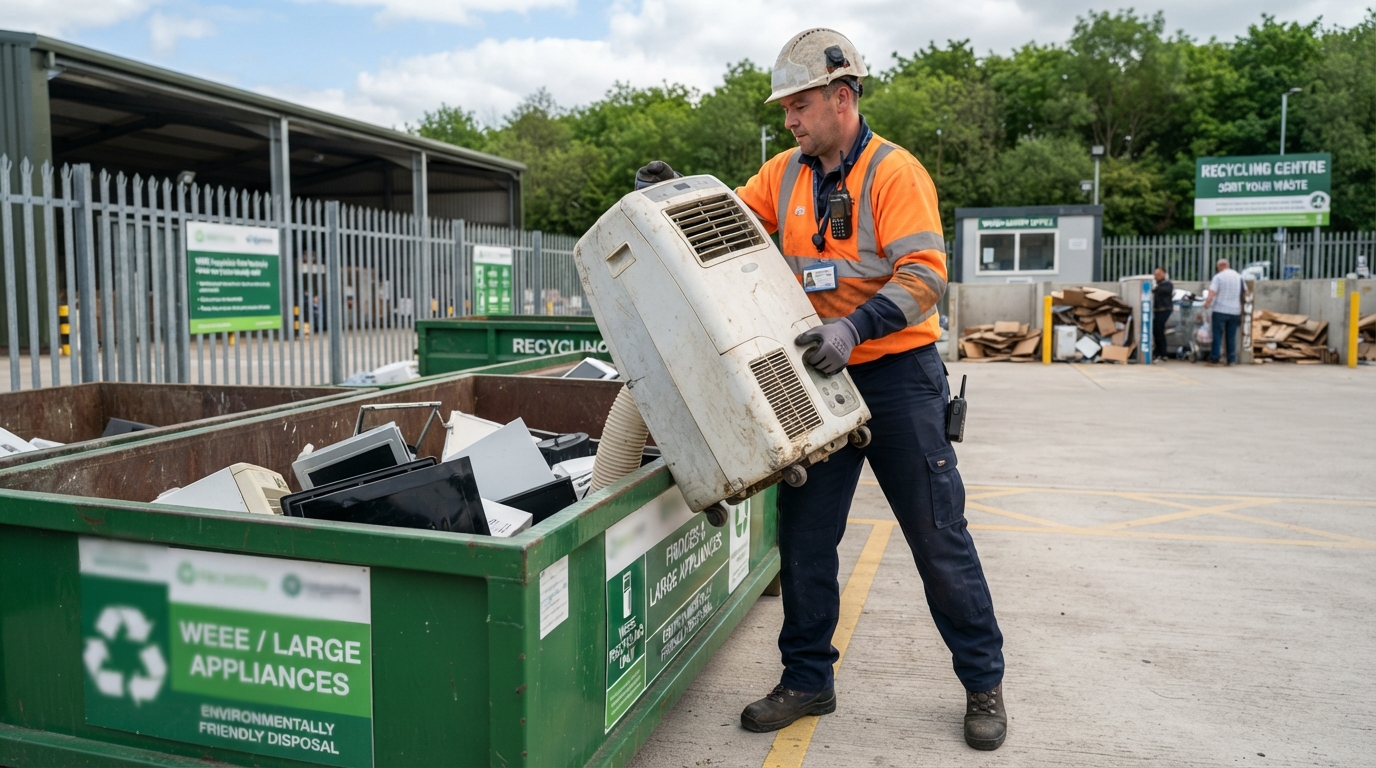
An old air conditioner is electrical waste (WEEE) containing refrigerant, so it can’t go in the bin and the gas has to be recovered by someone competent before the metal is recycled. The easy routes: if you’re buying a replacement, the retailer usually has to take the old one back; otherwise take a portable unit to your local Household Waste Recycling Centre (the tip), which has a proper process for degassing fridges and air conditioners, or book a council bulky-waste collection. A fixed split system is different — the refrigerant should be recovered by a qualified engineer as part of removal, not a DIY job. And if the unit still works, selling, donating or giving it away is the best option of all — reuse beats recycling every time.
Getting rid of an old air conditioner responsibly is genuinely easy once you know the routes — the only thing you must not do is treat it like ordinary rubbish. Here’s why, and every legitimate option.
Why it’s not ordinary rubbish
Two things make an air conditioner a special disposal case:
- It’s WEEE. Waste Electrical and Electronic Equipment is covered by regulations designed to keep electricals out of landfill and recover their materials. Air conditioners, like fridges and freezers, sit in the category that needs specialist handling.
- It contains refrigerant. The sealed circuit holds refrigerant gas, and releasing it is both an environmental offence and, with flammable R290, a safety hazard. The gas has to be recovered — captured and dealt with properly — by a competent person before the unit is broken up. This is exactly what the proper disposal routes are set up to do, and why you can’t just skip them.
Older units and split systems often contain fluorinated refrigerants (R32, R410A and similar) covered by F-Gas rules; many newer portables use R290. Either way the principle is the same: it must be recovered, not vented, and that’s a job for the disposal facility or a qualified engineer.
Route 1: retailer take-back when you buy a replacement
The simplest option if you’re upgrading. Under WEEE rules, retailers of electrical goods generally have obligations to help you dispose of the equivalent old item — whether that’s taking the old unit when they deliver the new one, or offering a take-back service in store or by post. It varies by retailer and how you buy, so ask before you order: many will collect the old one at the point of delivery, which is by far the least effort.
This is worth planning around if you’re replacing an old unit at the end of its life — our buying guide covers choosing the replacement, and doing it out of season is cheaper, per our timing guide.
Route 2: your local Household Waste Recycling Centre (the tip)
For a portable unit you’re not replacing, the tip is usually the answer. Household Waste Recycling Centres accept fridges, freezers and air conditioners and have a dedicated process for degassing and recycling them — that’s precisely what the “fridges and freezers” area is for.
- Check your council’s website first. Many HWRCs now require you to book a slot, and some have rules about van or trailer use, or resident permits.
- Put it in the right container. Staff will direct you to the area for refrigerant-containing appliances — don’t put it in general WEEE or scrap metal.
- Don’t damage it in transit. Keep it upright and intact so the sealed system isn’t compromised before it’s degassed.
Route 3: council bulky-waste collection
If you can’t get to the tip, most councils run a bulky household waste collection for large items, usually for a fee. Book it through the council website, state that it’s an air conditioner or a fridge/freezer-type appliance so it’s routed to the right treatment, and put it out as instructed. This is the accessible option if you don’t drive or can’t lift the unit — and see our note below on help for those who need it.
Route 4: producer or manufacturer take-back
Some manufacturers and producer compliance schemes operate take-back arrangements for their own or equivalent products. Check the manufacturer’s website or the documentation that came with the unit — this is more common for larger or commercial equipment but worth a look.
Split systems: not a DIY removal
The best option: reuse it if it still works
Recycling recovers materials, but reuse avoids the waste entirely — and it’s genuinely the greenest choice, so it’s worth trying first if the unit works:
- Sell it. Working portable air conditioners hold decent second-hand value, especially heading into summer. Local marketplace apps and listings sites move them quickly.
- Give it away. Free-to-collector listings and local giving groups find a home for a working unit fast, and save you the trip to the tip.
- Donate it. Some charities and reuse organisations accept working electricals — call ahead to check they take air conditioners and that it meets their condition and safety requirements.
- Pass it to someone who needs it. A working unit is genuinely useful to an older neighbour or relative in a heatwave.
If you sell or give it on, include the window kit, hose and remote, tell the new owner honestly about any faults, and hand over the manual if you have it.
A few practical points
- Take the batteries out of the remote and recycle them separately — batteries have their own collection and should never go in general waste.
- Empty the condensate tank and let a portable unit dry out before moving or storing it, so you’re not carrying water around.
- Keep it upright. Tipping a refrigerant unit on its side can disturb the oil in the compressor; keep it the right way up in transit.
- Don’t strip it for parts unless you know what you’re doing — the sealed system is the part that needs professional handling.
- Fly-tipping is a serious offence. Dumping an appliance carries significant penalties, and it’s completely unnecessary given the free and low-cost legitimate routes above.
If you can’t move it yourself
If lifting or transporting a heavy unit isn’t possible, the council bulky-waste collection is designed for exactly that, and some retailers collect on delivery of a replacement. Reuse charities sometimes collect working items too. Our cooling and disability guide covers wider support, and a working unit passed to someone else avoids the disposal problem altogether.
Frequently asked questions
Can I put an old air conditioner in general waste?
No. It’s electrical waste containing refrigerant that must be recovered by someone competent. Use retailer take-back, your local recycling centre’s fridge/appliance area, or a council bulky-waste collection.
Is it illegal to let the gas out?
Yes — releasing refrigerant to the atmosphere is an environmental offence, and with flammable R290 it’s a safety hazard too. Never puncture or open the sealed system; leave the gas recovery to the disposal facility or a qualified engineer.
How do I get rid of a fixed split system?
Have a qualified engineer decommission and remove it. The refrigerant has to be recovered before the pipework is disconnected, which requires certification — it isn’t a DIY job, and cutting the pipes yourself is both illegal and, with a flammable charge, dangerous.
Can I sell or give away a working unit?
Yes, and it’s the best option environmentally. Working portable units sell well, especially before summer. Include the hose, window kit and remote, and be honest about any faults.
Will the tip definitely take it?
Household Waste Recycling Centres accept fridges, freezers and air conditioners, but check your council’s site first — many now require booking, and some have permit or vehicle rules. Take it to the designated appliance area, not general scrap.
Sources
- GOV.UK — Electrical waste: retailer and producer responsibilities (WEEE)
- GOV.UK — Fluorinated gases (F-gases): rules
- GOV.UK — Recycling electrical items
- Recycle Now — What to do with electrical items
Related reading: our how long portable air conditioners last guide and buying guide for a replacement.
Buy out of season and ask the retailer to take the old one away. Compare current options at Amazon UK.